What Kinds of Elements Can You Store in Data Structures?
What are Data Structures?
Data structure is a storage that is used to store and organize data. It is a manner of arranging data on a computer so that it can be accessed and updated efficiently.
Depending on your requirement and project, it is important to choose the right data construction for your project. For example, if you want to store data sequentially in the memory, and so you tin can go for the Assortment data structure.
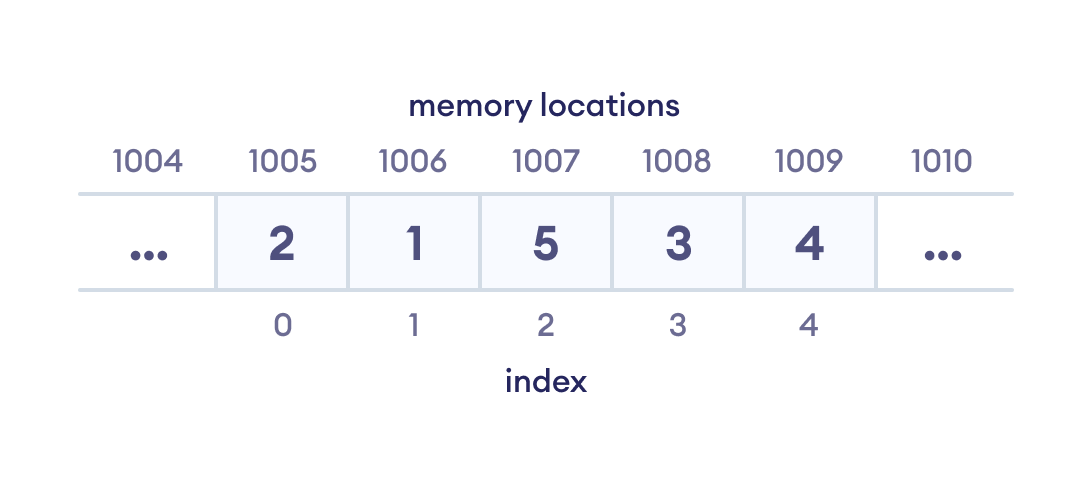
Note: Data construction and data types are slightly dissimilar. Data structure is the collection of information types arranged in a specific gild.
Types of Information Structure
Basically, information structures are divided into two categories:
- Linear data structure
- Non-linear information construction
Allow'due south learn almost each type in particular.
Linear information structures
In linear information structures, the elements are arranged in sequence one afterward the other. Since elements are arranged in particular guild, they are easy to implement.
Nevertheless, when the complexity of the program increases, the linear data structures might non exist the best choice considering of operational complexities.
Popular linear data structures are:
1. Array Data Structure
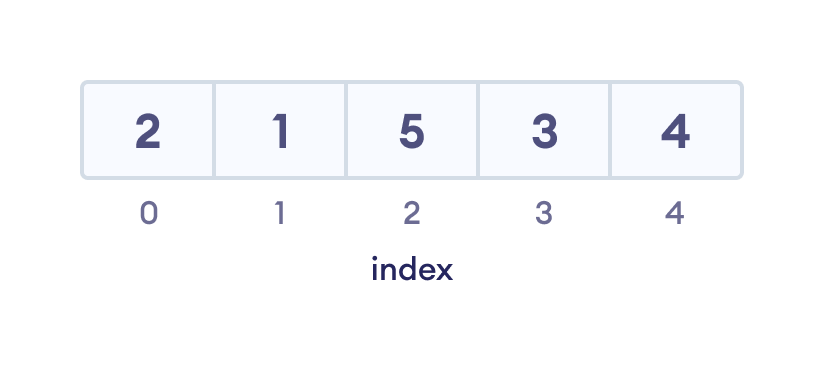
In an array, elements in retentivity are arranged in continuous memory. All the elements of an array are of the aforementioned type. And, the type of elements that tin exist stored in the course of arrays is determined by the programming language.
To learn more, visit Java Array.
2. Stack Data Structure
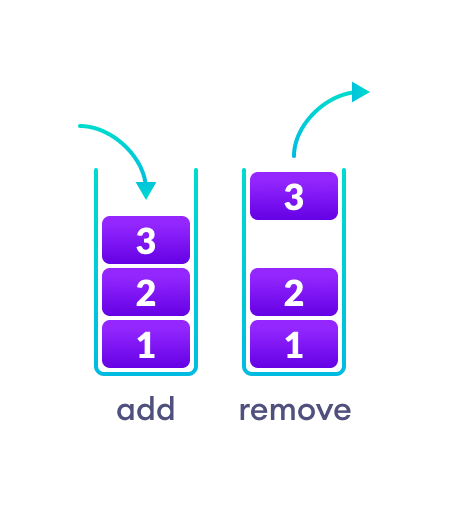
In stack data structure, elements are stored in the LIFO principle. That is, the terminal element stored in a stack will be removed first.
It works just like a pile of plates where the last plate kept on the pile will be removed first. To learn more, visit Stack Data Structure.
3. Queue Data Structure
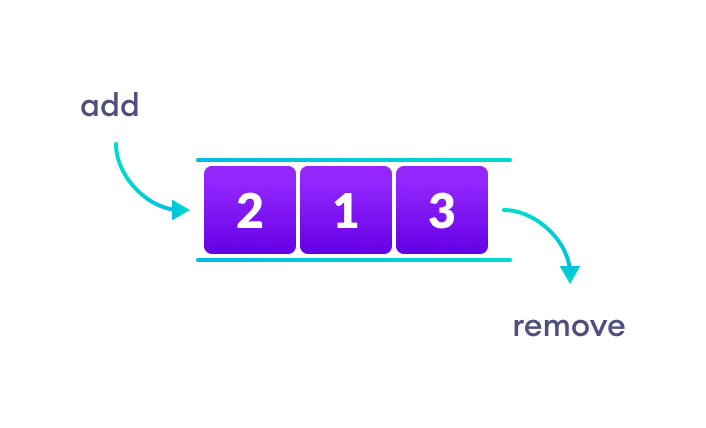
Dissimilar stack, the queue information structure works in the FIFO principle where first element stored in the queue will be removed first.
It works only like a queue of people in the ticket counter where first person on the queue will get the ticket beginning. To learn more than, visit Queue Data Structure.
iv. Linked List Data Structure
In linked list data construction, data elements are continued through a series of nodes. And, each node contains the information items and address to the side by side node.
To acquire more, visit Linked List Data Construction.

Non linear data structures
Unlike linear data structures, elements in non-linear data structures are not in any sequence. Instead they are arranged in a hierarchical manner where ane chemical element will be connected to one or more elements.
Not-linear information structures are farther divided into graph and tree based data structures.
1. Graph Data Structure
In graph data construction, each node is called vertex and each vertex is connected to other vertices through edges.
To larn more, visit Graph Data Structure.
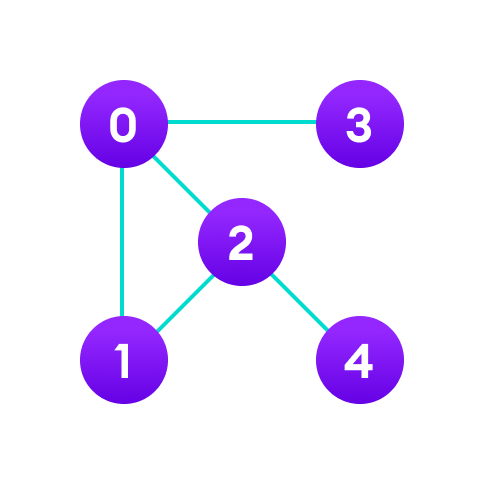
Popular Graph Based Data Structures:
- Spanning Tree and Minimum Spanning Tree
- Strongly Connected Components
- Adjacency Matrix
- Adjacency List
2. Trees Data Construction
Like to a graph, a tree is also a collection of vertices and edges. However, in tree data construction, there can only be one border betwixt 2 vertices.
To learn more, visit Tree Data Construction.

Popular Tree based Data Structure
- Binary Tree
- Binary Search Tree
- AVL Tree
- B-Tree
- B+ Tree
- Red-Black Tree
Linear Vs Non-linear Data Structures
At present that we know virtually linear and non-linear data structures, let'due south see the major differences between them.
| Linear Data Structures | Non Linear Information Structures |
| The data items are bundled in sequential social club, one afterward the other. | The data items are bundled in non-sequential order (hierarchical manner). |
| All the items are present on the single layer. | The information items are present at different layers. |
| Information technology can be traversed on a single run. That is, if we showtime from the first element, we can traverse all the elements sequentially in a single pass. | It requires multiple runs. That is, if we start from the first element it might not be possible to traverse all the elements in a single pass. |
| The retentivity utilization is non efficient. | Unlike structures utilize retentiveness in different efficient ways depending on the demand. |
| The fourth dimension complexity increase with the data size. | Time complexity remains the aforementioned. |
| Instance: Arrays, Stack, Queue | Example: Tree, Graph, Map |
Why Data Structure?
Noesis about information structures assistance you understand the working of each data structure. And, based on that you lot can select the right data structures for your project.
This helps you write retentivity and time efficient code.
To learn more most the importance of data structure, visit Why Learn Data Construction?
bainbridgeyeand1988.blogspot.com
Source: https://www.programiz.com/dsa/data-structure-types
0 Response to "What Kinds of Elements Can You Store in Data Structures?"
Post a Comment